Key Takeaways
- Ghettos and slums are both types of marginalized urban areas shaped by social, political, and economic forces.
- The term “ghetto” often refers to areas where specific communities are segregated, usually based on ethnicity or religion, due to external constraints.
- Slums primarily denote urban settlements with inadequate infrastructure, overcrowding, and limited access to basic services, regardless of the residents’ backgrounds.
- While both environments face significant challenges, their origins, population composition, and social dynamics differ considerably.
- Understanding the distinction between ghettos and slums reveals nuances in how cities manage exclusion, poverty, and urban planning.
What is Ghetto?

A ghetto is a designated area within a city where members of a specific community, often a minority group, are compelled to live due to social, economic, or political pressures. Historically, ghettos have emerged as a result of enforced segregation or discrimination by authorities or societal norms.
Origins and Evolution
The concept of the ghetto originated in 16th-century Venice, where Jews were required to reside in a walled quarter. Over centuries, the term expanded to encompass various urban districts globally where distinct groups were isolated.
In the United States, ghettos became particularly prominent during the Great Migration, as African Americans moved north and were confined to specific city neighborhoods. This pattern was often reinforced by legal restrictions such as redlining and racially restrictive covenants.
European cities, too, saw the development of Jewish ghettos, especially during World War II, when forced segregation reached its most extreme forms. The Warsaw Ghetto, for example, became a symbol of both suffering and resistance.
Modern ghettos may not be officially mandated by law, but socioeconomic forces and systemic discrimination still perpetuate their existence. These areas often reflect lingering legacies of exclusion and marginalization.
Demographic Composition and Identity
Ghettos typically form around a shared identity, whether ethnic, religious, or cultural. Residents often develop a strong sense of community, preserving traditions and social ties within the confines of the district.
In many American cities, the term “ghetto” is closely associated with African American neighborhoods, but it has also applied to Italian, Jewish, and Latino communities at different times. This shifting identity reflects broader migration and integration patterns.
Ghettos can sometimes foster vibrant cultural expressions, such as music, cuisine, and art unique to the group residing there. However, these cultural developments often occur alongside economic hardship and social isolation.
Social cohesion within ghettos can serve as a double-edged sword, providing support but also reinforcing insularity and limiting upward mobility. The shared background of residents both unites and distinguishes them from surrounding populations.
Socioeconomic Realities
Ghettos are frequently characterized by limited economic opportunities and high rates of poverty. Discrimination in employment, education, and housing can perpetuate cycles of disadvantage for residents.
Access to quality public services, such as schools and healthcare, is often restricted or inadequate within ghettos. Infrastructure may lag behind that of other city districts, contributing to persistent inequality.
Despite these challenges, informal economies and community-based organizations often flourish, providing alternative means of subsistence and support. These networks can help residents navigate daily hardships.
Economic mobility for those in ghettos tends to be constrained by external prejudice and internal resource limitations. The interplay between exclusion and resilience shapes daily life and long-term prospects.
Spatial Characteristics and Urban Form
Ghettos are usually demarcated by clear boundaries, whether formal (walls, checkpoints) or informal (railroad tracks, highways). These borders serve both to contain and to separate the community from the wider city.
Housing stock in ghettos varies, but overcrowding and substandard conditions are common due to limited investment. Sometimes, the built environment reflects earlier periods of prosperity, now in decline.
Urban renewal projects and gentrification can threaten the continuity of ghetto communities, leading to displacement or cultural loss. Changing cityscapes often reshape the physical and social makeup of these districts.
The spatial isolation of ghettos often influences access to jobs, transportation, and social services, reinforcing cycles of marginalization. The spatial arrangement of ghettos is a visible marker of broader social divides.
What is Slum?
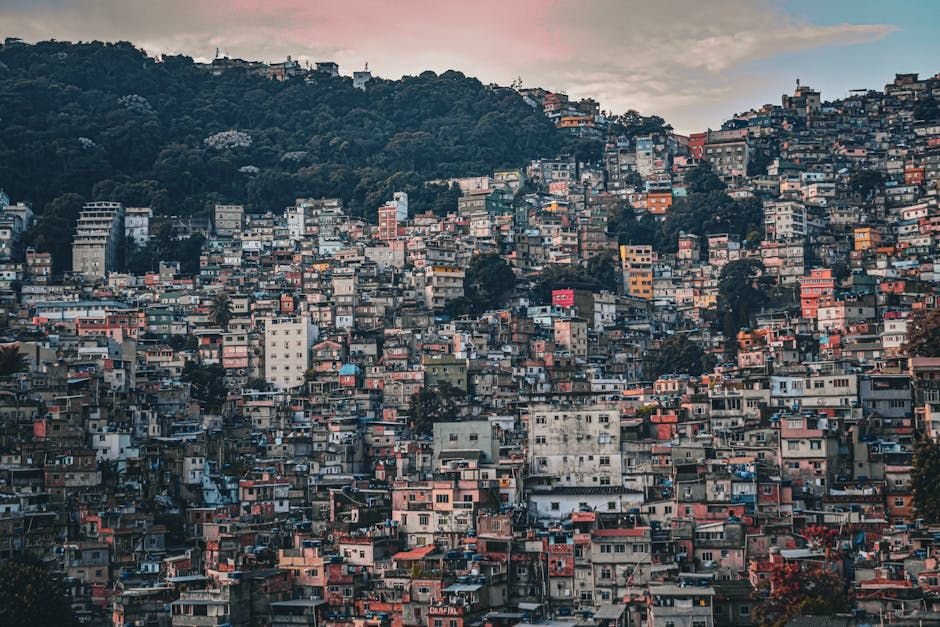
A slum refers to a densely populated urban area characterized by inadequate housing, poor sanitation, and a lack of essential services. Slums commonly emerge where rapid urbanization outpaces infrastructure development, drawing diverse populations seeking economic opportunity.
Formation and Growth Drivers
Slums often arise on city peripheries or in unused spaces, where land tenure is insecure and housing is constructed informally. Migration from rural regions to cities, especially in developing countries, accelerates slum expansion as newcomers seek affordable shelter.
Lack of affordable housing and lenient enforcement of zoning laws contribute to the proliferation of slums. City authorities may tolerate these settlements due to the labor force they provide, despite the absence of formal recognition.
Natural disasters or conflict can also trigger the sudden growth of slums, as displaced populations seek refuge in urban areas. The resulting settlements are frequently overcrowded and lack planning.
Slums can persist for decades, gradually evolving from temporary shelters to established neighborhoods, albeit with persistent infrastructural deficits. Their endurance often reflects both necessity and neglect.
Diversity and Social Structure
Slum populations are typically heterogeneous, drawing residents from multiple regions, backgrounds, and ethnicities. This diversity arises because slums are open to anyone who cannot afford formal housing, rather than being restricted by group identity.
Social networks within slums are often based on shared vulnerability and practical cooperation rather than cultural or religious ties. Residents may form neighborhood associations to address collective needs, such as water access or security.
Despite high population density, slum communities frequently lack the organized, insular identity seen in ghettos. Instead, the focus is on survival and incremental improvements to living conditions.
Children in slums may speak different languages at home, reflecting the mixed origins of their families. The absence of a single dominant culture distinguishes slums from more homogeneous urban enclaves.
Living Conditions and Infrastructure
Slums are marked by makeshift housing, often built with salvaged materials and lacking basic amenities like electricity, plumbing, or waste management. Overcrowding is common, with several families sometimes sharing a single room or dwelling.
Unsafe water sources, poor sanitation, and inadequate healthcare contribute to heightened disease risk in slum environments. These conditions are exacerbated during rainy seasons, when flooding can destroy homes and spread illness.
Public services in slums are typically informal or absent, forcing residents to rely on unregulated providers for essentials like water or electricity. This can lead to exploitation and increased living costs for the poorest families.
Efforts to upgrade slum infrastructure often face legal and logistical challenges, such as unclear land ownership and resistance from property developers. Nevertheless, some cities have launched successful sanitation and housing improvement projects through community engagement.
Economic Activity and Informality
Slums are hubs of informal economic activity, with residents working as street vendors, day laborers, or in small-scale manufacturing. The lack of formal employment opportunities means that most income is generated outside regulated sectors.
Entrepreneurial spirit thrives in slums, as necessity drives innovation and adaptability. Examples include recycling businesses, food stalls, and transportation services tailored to local needs.
Financial exclusion is common, as residents may lack documentation or collateral required for bank loans. Informal savings groups and microfinance institutions sometimes fill this gap, enabling small-scale investment.
Despite these adaptive strategies, earnings in slums are generally low and unstable, making residents vulnerable to economic shocks. Limited upward mobility reinforces the cycle of poverty.
Comparison Table
The following table contrasts various dimensions of ghettos and slums, highlighting their unique characteristics in the